“Great, so Friday works for everyone?” You want to say yes for one client and no for the other seven. While you search for a polite opening, the chair starts the next agenda item. This is the moment to rehearse.
In this fictional meeting, eight customers are waiting for a new service. The pilot customer has a support engineer assigned for the weekend. The other seven would depend on a second shift that nobody has booked. You own support, so your colleagues need to know which part of the plan you can commit to.
Take the floor while the date is still open
Try a short interruption you can say in one breath. “Before we confirm Friday, can I check which customers we mean?” Then pause. The answer might settle half the problem. If the chair means only the pilot, you can agree and ask for the other date to be recorded separately.
If the chair means all eight, give the distinction in two short sentences. “I can support Friday for the pilot customer. We only have weekend cover for that one account.” The word only belongs next to the limit. Your listener should be able to tell which part of Friday's plan is ready.
Say what would change your answer
Chair — “Sales has promised a date this week. What would it take to include all eight?”
Support lead — “We need a second weekend shift. If we can confirm it by noon on Thursday, I can support Friday for everyone. Otherwise, could we start the other seven on Monday?”
Chair — “Could you check who is available and tell us on Thursday morning?”
Support lead — “Yes. I'll speak to the shift manager today and post an update by eleven on Thursday. Can we hold the customer announcement until then?”
Read the condition aloud twice. The first time, pause after “Thursday”. The second time, put extra stress on “second shift”. Ask your partner which version made the dependency easier to hear. The time when you will report back and the time by which cover must be confirmed are two different commitments.
Correct a summary that leaves out the condition
The chair closes with “Excellent, support has agreed to Friday.” A useful response starts with the one detail you need to correct. “One clarification before we send that. The pilot is confirmed for Friday. The other seven depend on weekend cover.” This gives the person writing the minutes two sentences they can use immediately.
If the chair asks for a shorter answer, try “Yes for one customer. For the other seven, I'll confirm by Thursday at noon.” If a senior colleague wants the reason in writing, give them the same decision in the same order. A more formal register can still use short words and specific dates.
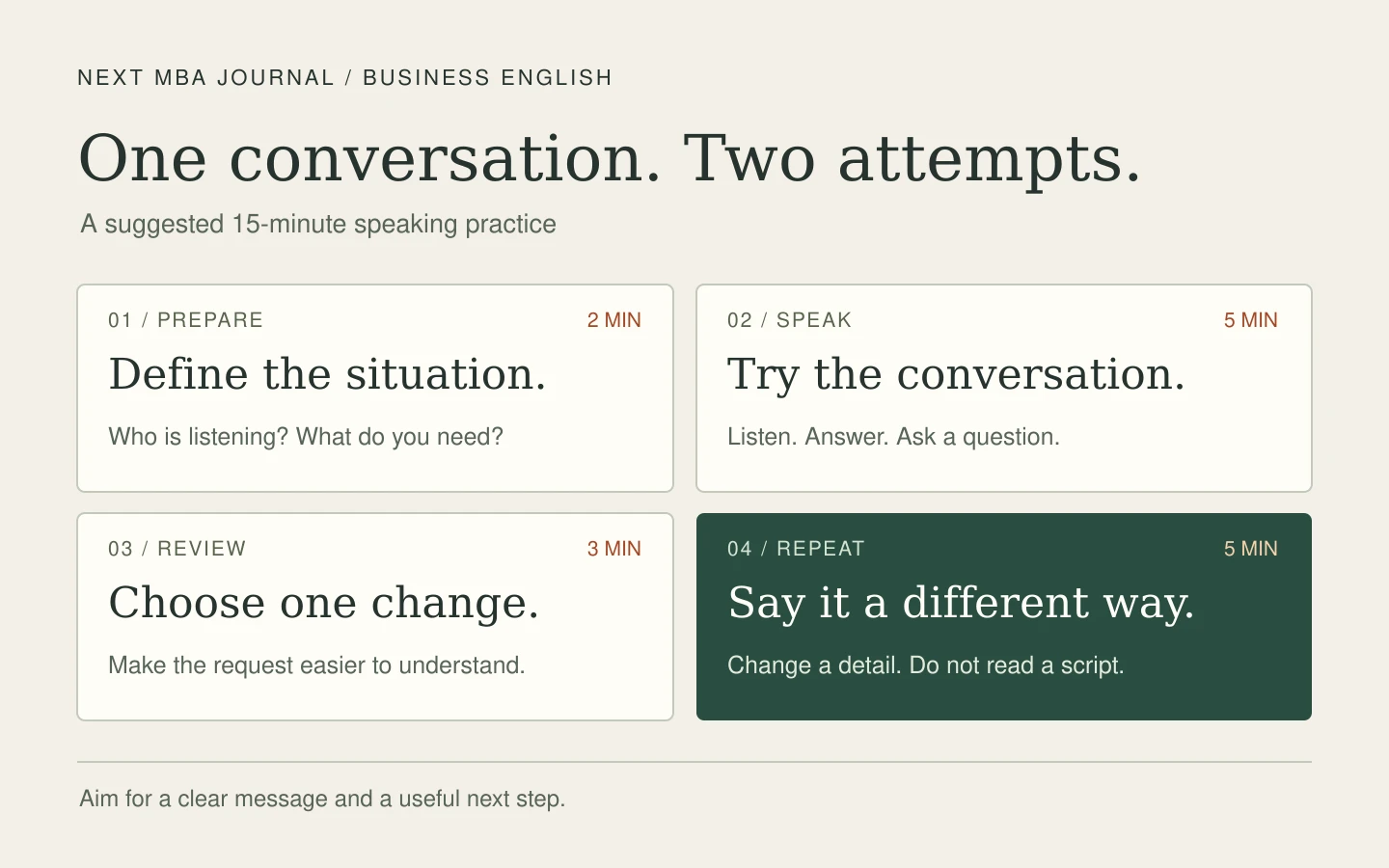
Run the same meeting twice
Ask a partner to play a friendly colleague first, then a hurried director. Give them one instruction privately. On the second run they should repeat your answer with one detail wrong. You must hear the mistake, interrupt and correct it before anyone writes down the decision. Change the deadline or customer count between rounds so that you have to listen.
At the end, ask your partner to say who can launch on Friday, what has to happen for the others and who owes the next update. Their answer tells you which sentence to practise again. To try the same skill in a different conversation, use the team planning exercise on disagreeing politely. For a wider set of roles, see the guide to practising business English with AI.
For more listening practice, the British Council offers a lesson on agreeing and disagreeing. The launch conversation here was written for this exercise.
Find the words for your next meeting
Practise speaking with the AI language tutor. Bring a situation from work and try your response out loud.
Explore the AI language tutor