Founders & owners
Understand where growth could come from, what makes your offer different and where to focus your marketing effort.
 Join the live course
LIVE ONLINE · SATURDAY SESSIONS
Learn live. Ask. Discuss. Apply.
12 modules of strategy, customers and AI.Marketing decisions. Business context.
For founders, CEOs and business leaders who want a clearer view of their marketing, customers and opportunities for growth. Bring questions about your own company. Connect the lessons to the decisions ahead of you.


Lars Silberbauer, a seasoned leader at Nokia Phones and the International Olympic Committee, ascended from the Danish Broadcasting Corporation to impactful positions at LEGO.
Bring a question.
Leave with direction.
Live classes. Real-time Q&A.
Your business in the conversation.
AI in Marketing
Starts 14 November 2026 at 12:00 GMT (London). Join live online on Saturdays, with a holiday break on 26 December and 2 January. Explore real business cases and ask questions during live Q&A. Recordings are available in your account for 7 days after each live session.
Make your next moveWhere could AI make a useful difference in your marketing?
Explore applications of AI in customer research, content, campaigns and automation. Consider which tasks fit your business and what you need to check before using the output.
Assess AI opportunities across your marketing workflow, including customer insights, creative production and analytics. Learn how to set priorities and keep people responsible for decisions.
What needs to change before you enter another market?
Examine international market entry and cross-cultural marketing through real cases. Look at how customer expectations, positioning and channels change between markets.
Compare markets, identify the evidence you need and consider how to adapt your offer and communications before committing resources.
Why do customers return, and where do you lose them?
Study customer relationships, loyalty and personalised communication. Connect retention decisions to the experience people have with your company.
Evaluate CRM, loyalty and communication approaches. Identify opportunities to strengthen relationships throughout the customer journey.
Which tools does your business actually need?
Explore CRM, automation, AI and analytics as parts of a marketing workflow. Consider how technology can support customer communication and reduce repetitive work.
Understand customer segmentation, automated communication and content workflows. Compare use cases and define the problem a tool should solve before choosing it.
How do you judge whether a campaign idea is worth testing?
Examine storytelling, creative campaigns and brand communication. Consider how a clear customer insight becomes an idea your audience can recognise and respond to.
Discuss creative direction, visual storytelling and the use of AI in developing and testing ideas. Build a stronger basis for briefing your team and reviewing proposals.
What do you need to know before making your next marketing decision?
Explore market research and analytics through practical cases. Look at how evidence about customers, competitors and changing demand informs strategy.
Understand segmentation, consumer behaviour and trend analysis. Frame useful research questions and connect findings to your business priorities.
What role should social media play in your business?
Examine platform choice, content, communities and influencer marketing. Connect social media activity to the people you want to reach and the action you want them to take.
Explore social strategy, advertising and analytics. Assess content choices and understand how awareness, engagement and conversions relate to your goals.
Which changes deserve your attention and investment?
Consider emerging technology and shifts in customer behaviour. Discuss how to judge new opportunities against your business model and existing priorities.
Explore AI, personalised experiences, AR and VR, and changing consumer preferences. Consider the relevance of each development before deciding what to test.
How does the customer experience support your growth?
Explore service marketing and customer-centred business decisions. Examine the touchpoints that shape expectations, trust and repeat business.
Use service frameworks and case studies to assess customer experiences and connect service decisions to your marketing strategy.
Where will your business compete, and why will customers choose you?
Bring market analysis, segmentation, positioning and planning together. Explore how a clear strategy guides everyday choices about customers, channels and investment.
Use strategic marketing frameworks and competitive analysis to define priorities. Connect the evidence you gather to the choices your team needs to make.
How should you choose and assess your digital marketing channels?
Explore SEO, paid search, content and social media as parts of a wider acquisition strategy. Examine how analytics helps you understand the customer journey.
Compare the roles of digital channels, understand campaign reporting and consider how to connect activity to measurable business objectives.
What helps customers make a decision?
Study the cognitive, emotional and social factors behind buying decisions. Examine how people assess an offer, form preferences and respond to communication.
Use consumer behaviour frameworks to improve your understanding of customer motivations. Apply those insights to positioning, messaging and the buying experience.
Understand where growth could come from, what makes your offer different and where to focus your marketing effort.
Connect marketing to business priorities. Ask better questions, assess proposals and work more effectively with your team and agencies.
Strengthen your strategic judgment, connect campaigns to commercial goals and explain your recommendations to the people running the business.
Use each module to examine a real marketing decision in your company.
Use customer and competitor insights to explain who your offer is for and why they should choose it.
Compare marketing channels and opportunities so you can make more informed decisions about budget and priorities.
Set clearer briefs and discuss objectives, evidence and trade-offs with your team and external partners.
Connect campaign reporting to customer acquisition, retention and business goals.
Assess where AI and automation can support research, content and customer communication, and where human review matters.
Use the frameworks to identify the marketing questions, experiments and priorities worth working on in your company.
Receive a NEXT MBA certificate of completion when you finish the program.
Student feedback.
Read the individual experiences below.
Swipe or use the arrows to explore all 23 reviews. Select a review to read it in full.
From 14 November to 13 February. Twelve modules, taught live on Saturdays at 12:00 GMT (London), with new ideas, real business cases and Q&A.
Holiday break: 26 December and 2 January. No classes.
AI in Marketing
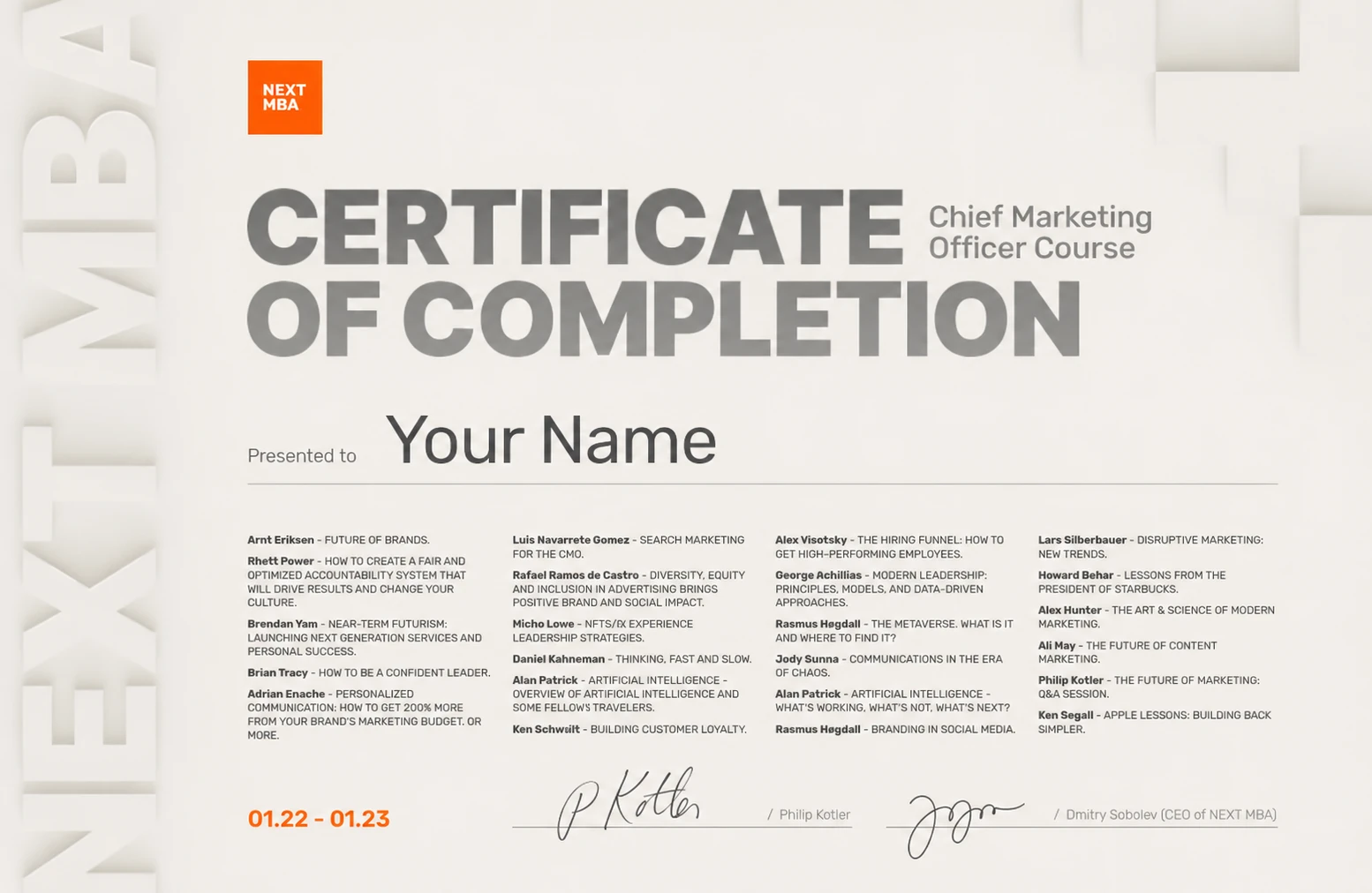
Your final Saturday is 13 February. Complete the programme and receive a personalised NEXT MBA certificate, with the names of your lecturers and the topics you studied.
CHIEF MARKETING OFFICER COURSE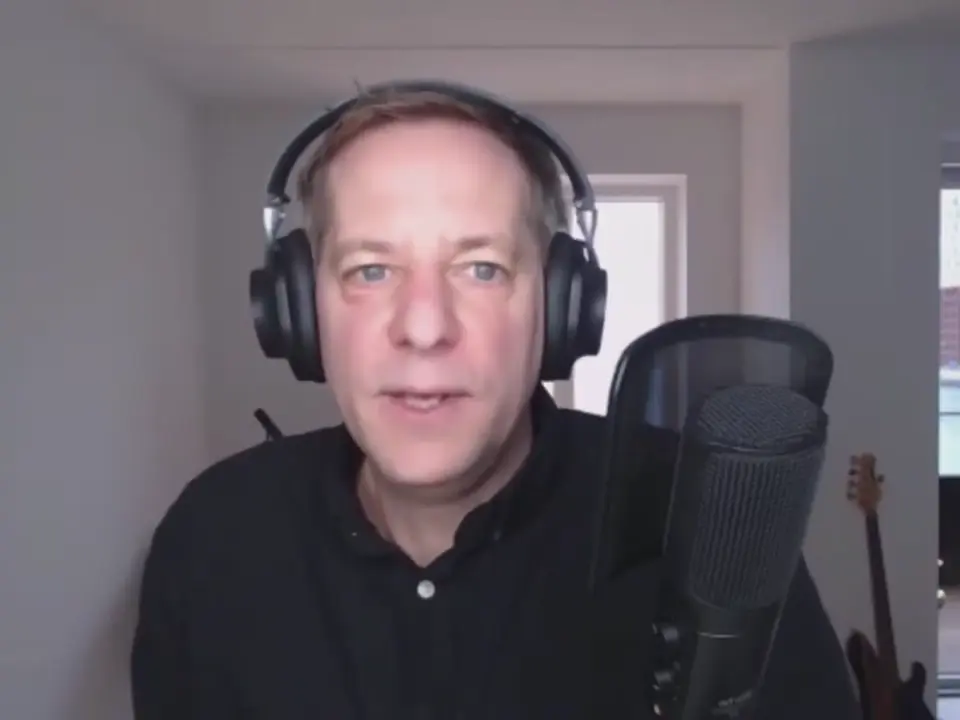
Every live session is recorded. The recording is available in your account for 7 days after the broadcast, so you have a full week to catch up, rewatch and revisit the ideas you need.
7 days to watch and rewatch each live session.12 modules. Live online. One clear price.
Join the Chief Marketing Officer Course live online.
Learn with experienced practitioners, take part in Q&A and revisit each recording for 7 days after the live session.
Save $300 when you enrol today
Join the live courseYes. The program includes 12 modules, taught live on Saturdays at 12:00 GMT (London), from 14 November 2026 to 13 February 2027 (no classes on 26 December or 2 January), with Q&A where you can ask questions in real time. Each session recording is available in your account for 7 days after the live broadcast, so you can catch up and watch it again.
Yes. Chief Marketing Officer Course is designed for founders, CEOs and business leaders who want to make better marketing decisions. You can use the material to assess opportunities, ask better questions and work with your team or agencies. Marketing leaders are welcome too.
The complete Chief Marketing Officer Course costs $299, paid once. All 12 modules, live online sessions and 7-day access to each session recording are included. We send your course access details within one business day of confirmed payment. There is no monthly subscription.
Yes, we have a course certificate, granted to the students upon completion of the course. The certificate mentions names of all the speakers and the topics they spoke on.
Each live session recording is available in your account for 7 days after the broadcast, so you can catch up and watch it again. Presentation slides are attached where the speaker has made them available.
The course starts on 14 November 2026 at 12:00 GMT (London): 07:00 in New York, 12:00 in London, 16:00 in Dubai and 20:00 in Singapore. The 12 modules are taught live on Saturdays, with a holiday break on 26 December and 2 January and the final class on 13 February 2027. Each recording is available for 7 days after the live session.
Course access is personal. For access for colleagues or an entire team, contact service@nextmba.com.